Trending

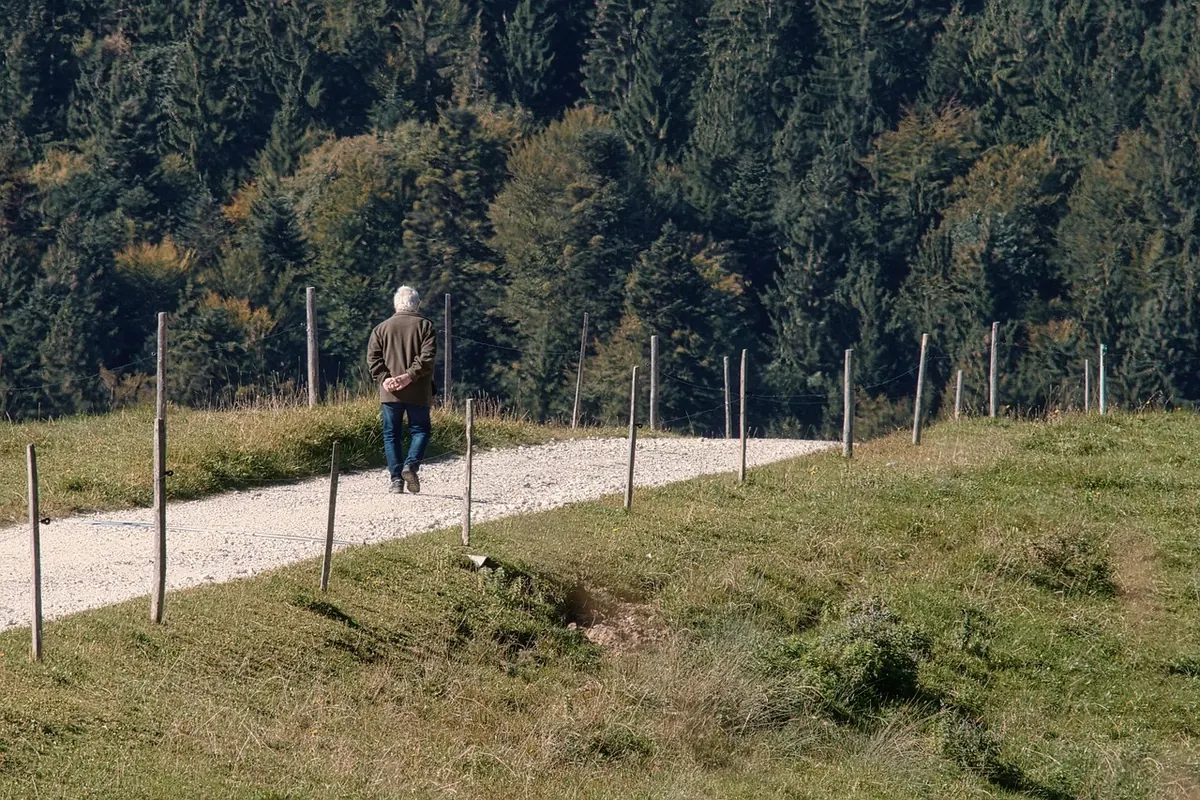
Rain is the standard excuse for staying indoors. It is also the thing that turns a walk into something you did, rather than something that happened between the car and the front door. Mindful walking is not complicated: you go outside, you pay attention to what your body and the weather are doing, and you come back. The British climate gives you plenty to pay attention to. Here is how to make it work on a grey Tuesday in February, not just a bright morning in May.
It is not about emptying your head or forcing yourself into calm. It is about giving your attention to what is physically happening: the rhythm of your feet, the air on your face, the sound of water running down a gutter. Sitting meditation asks you to stay still, which plenty of people find difficult. Walking gives your body a job while your attention settles.
A simple shape for a twenty-minute walk: for the first five minutes, notice your feet. Heel, roll, toe. For the next five, notice your breathing and the sounds around you. For the last ten, widen out. What can you see, smell, feel? When your mind drifts to the shopping list, that is normal, not failure. Noticing the drift and coming back is the practice.
Ten minutes is enough. Leave the house, walk in one direction for five minutes, turn round, come back. No route planning, no pace target. If you only manage this once a week to start with, that still counts.
The common beginner's mistake is dressing for the temperature on the thermometer rather than the one outside. Four degrees with a stiff wind off the sea feels very different from four degrees in still air. Layers solve this, because you can remove one when you warm up and put it back on when you stop.
None of this needs to be expensive or branded. A supermarket waterproof, an old fleece and a pair of trainers with tread will get you round a twenty-minute loop perfectly well. Upgrade when you know you will keep going.
Learn the difference between showers and a front. Showers pass; a band of rain settles in for hours. The rainfall radar on a forecast app tells you far more than the little cloud icon does. If a shower is twenty minutes away, walk now and you will be home before it arrives.
Check wind direction as well as wind speed. Walking into the wind first means the return leg is easier and you are not sweating into a headwind with a wet back. On exposed routes, a coastal path or a moorland edge, add a layer to whatever the forecast suggests. Look at the ground, too. Riverside paths and low-lying field edges flood after heavy rain, and a route that was fine in July can be ankle-deep in January.
Pick a fifteen-minute circuit from your front door with three or four turns. Walk it in six different conditions over a month: drizzle, bright cold, gusty, after rain, at dusk, in fog. Same route, entirely different walks. This is the cheapest way to learn what kit you actually need.
Canal towpaths, riverside paths, old railway lines and park perimeters are flat, easy to follow and often lined with trees that break the wind. They are also usually close to home, which matters on days when motivation is thin.
You do not have to be in the countryside. A walk through a town centre, looking up at rooflines, dates on buildings, ironwork and lettering, is a genuine mindful walk and offers some shelter from the wind. The point is attention, not scenery.
For anything longer than a local loop, tell someone your route and rough return time, and take a charged phone. Ice is the real hazard in a British winter, more than rain or cold: pavements and wooden boardwalks turn slick, and a fall on a hard path can end your walking for weeks. If the wind is strong enough to make you unsteady, or the rain is heavy enough that you cannot see the path ahead, turn round. The walk will still be there tomorrow.
If you are new to regular exercise, or you have a heart or lung condition, check with your GP before building up distance. Stop and seek medical help if you feel chest pain, severe breathlessness or dizziness rather than ordinary effort.
Three walks. Ten minutes, fifteen minutes, twenty minutes. Make one of them deliberately rainy, so the worst has already happened and you know you can handle it. After each walk, note one thing you noticed that you would have missed indoors. A wet gate latch. The smell of a hedge after rain. The particular grey of a February afternoon.
That note is the whole method. Everything else, the layers and the routes and the step counting, is just there to get you out of the door often enough for the noticing to become a habit.
Photo: Antranias / Pixabay